



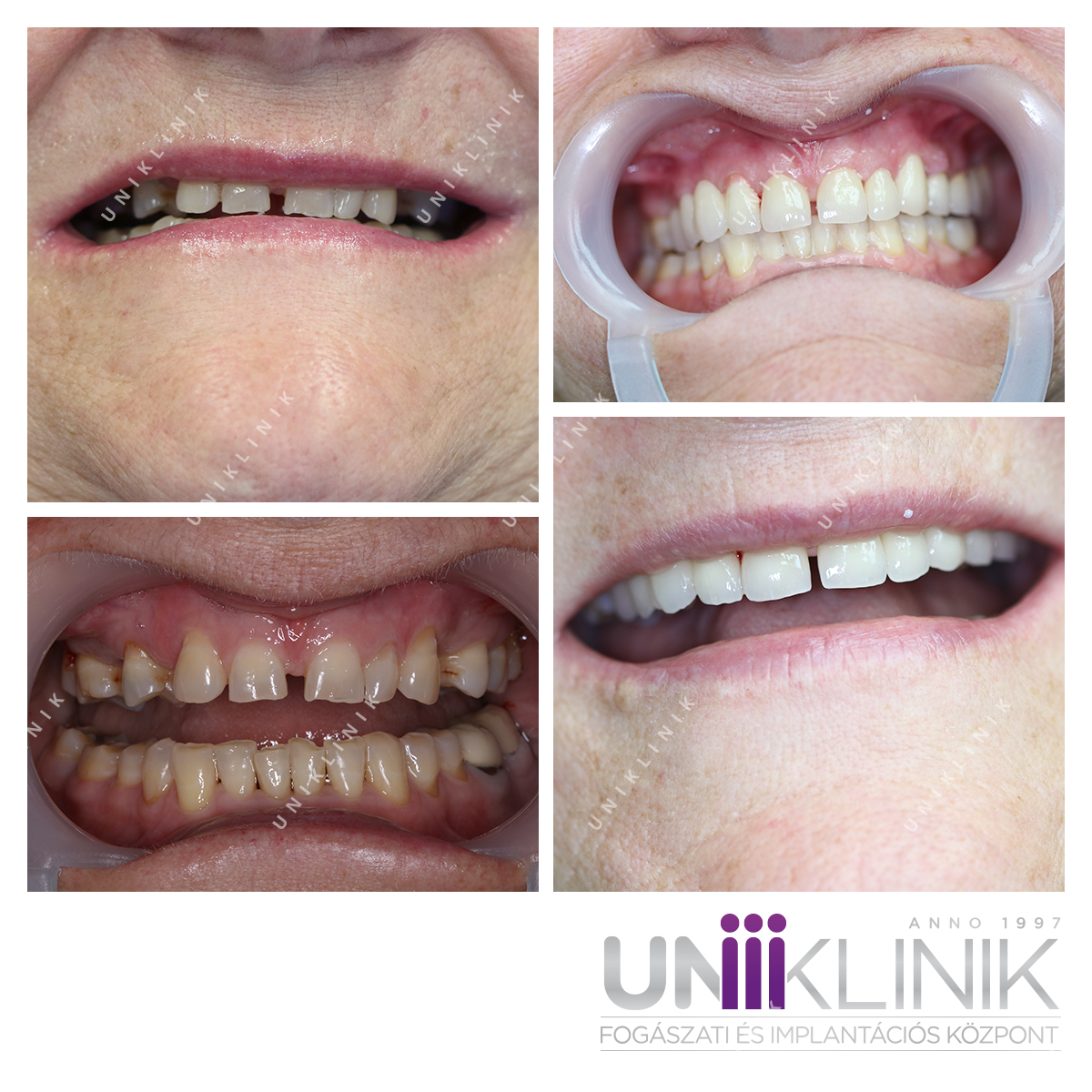
Modern techniques and materials currently used to replace missing teeth or tooth sections make it almost impossible to distinguish the finished crowns from natural teeth. What is the popular ceramic crown made of, and what other materials can be used for dental restorations?
What is a dental crown and when is it necessary?
A dental crown is a type of dental restoration primarily used to treat:
- teeth with extensive cavities or fillings,
- weakened or severely damaged teeth (due to trauma),
- teeth undergone root canal treatment.
The aim is to improve chewing function and the patient’s appearance. Along with traditional restorations, such as crowns, bridges, and removable dentures, implant-supported restorations have emerged in recent decades. A crown is made for a tooth with remaining structure, while in the case of an implant, the crown is placed on the abutment.
Ceramic crown and other options: which materials can be used for crowns?
Various materials can be used to create crowns, including:
- porcelain/ceramics,
- zirconium dioxide,
- metals,
- composites, and
- combinations of different materials.
A metal-ceramic crown with a porcelain coating, for example, combines the durability of metal with the natural appearance of porcelain. Meanwhile, a porcelain-fused-to-zirconium crown is layered over a zirconium dioxide framework, offering even better aesthetics.
When selecting the material for the crown, the dentist considers factors such as:
- the position of the tooth,
- how much will be visible during speech or smiling,
- the function of the tooth, and
- how much healthy tooth structure remains.
Metal-free crowns for patients with metal allergy
Porcelain crowns can be built on a framework of metal alloys or on a metal-free framework. Zirconium is an excellent choice for those with metal allergies because it is metal-free. Moreover, zirconium crowns allow light to pass through almost all of their layers, creating a natural color effect. While porcelain crowns on a cobalt-chromium framework are a more cost-effective solution, they do not have the same aesthetic properties as zirconium crowns, making the latter the better choice for front teeth.
Full zirconia or monolithic zirconia crowns are carved from a zirconium block, so they lack a porcelain covering but perfectly mimic the biomechanical properties and aesthetics of natural teeth. Additionally, metal-free pressed ceramic crowns are available for front teeth, which are non-allergenic, biocompatible, and offer the highest aesthetic properties.
Using CAD/CAM technology for creating ceramic crowns
The CAD/CAM technology, which involves computer-assisted design and manufacturing, enables much more precise planning and execution. After the porcelain tooth is bonded, a perfect fit is achieved, which, when proper oral hygiene is maintained, minimizes the risk of secondary decay.
Ceramic crown prices
The price of a porcelain crown depends on the materials and technology used. After thorough examinations, the specialists at UNIKLINIK Dental and Implant Center recommend a dental restoration that fits well with the original teeth and the anatomical characteristics, as well as the individual expectations of the patients.
Do you need a dental crown or restoration? Contact us by phone or schedule an appointment online so we can provide you with the best possible treatment. At our clinic, we offer the latest aesthetic dental treatments and procedures, ranging from smile design to tartar removal, all within the framework of aesthetic dentistry.
Our dental practice has its own X-ray and CT laboratory, allowing us to perform all necessary imaging for accurate diagnosis, from simple periapical X-rays and panoramic X-rays to 3D CT scans.