



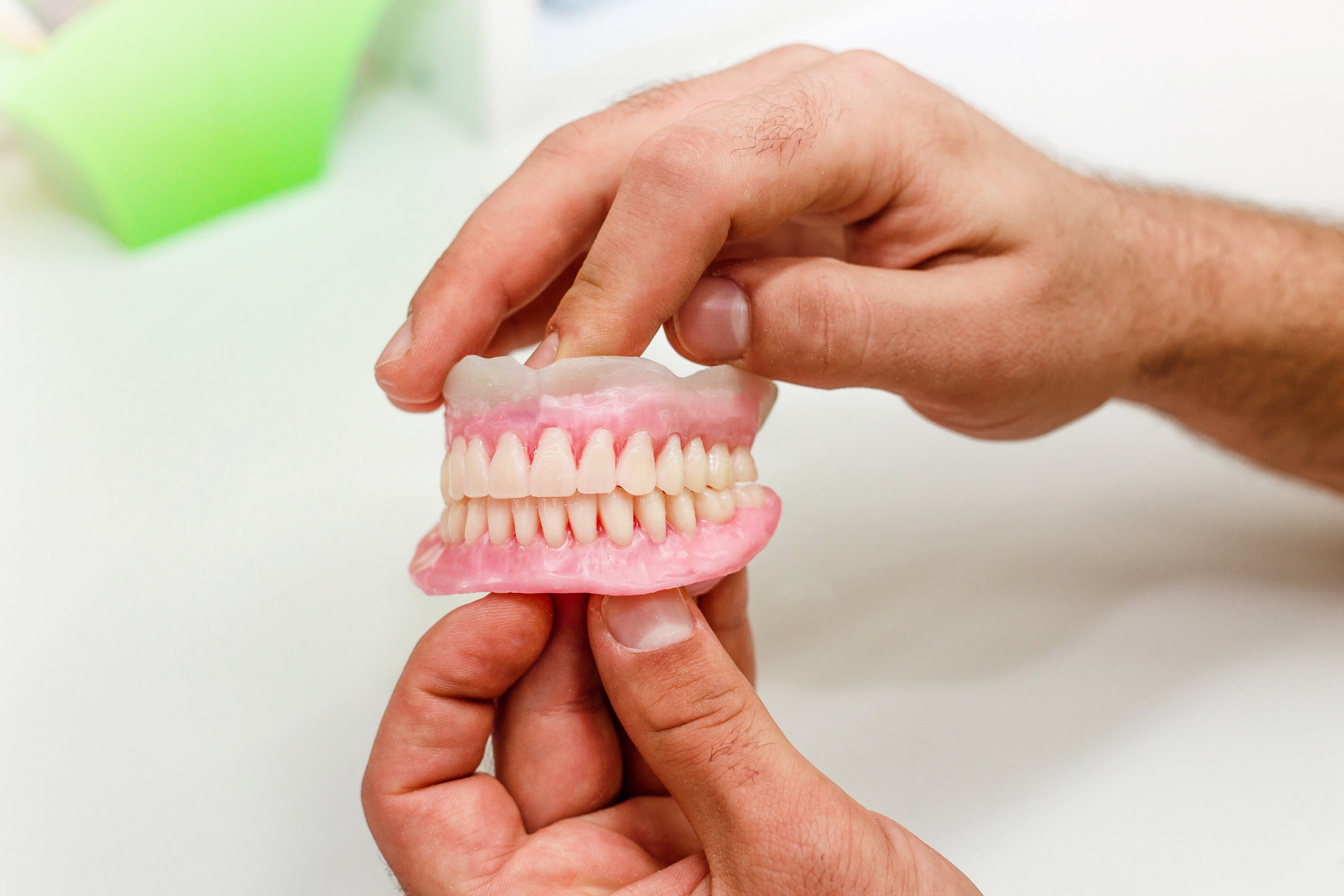
Dentures are removable custom-made dental prostheses supported by the surrounding tissues, designed to replace missing teeth. When are dentures needed, and how can we distinguish between different types of dentures? What should we know about their maintenance? In this article, we answer all the common questions our patients ask about prosthetics.
What are dentures?
Dentures serve the purpose of replacing missing teeth in cases of extensive or complete tooth loss on the lower, upper, or both dental arches, when bridges or crowns can no longer offer a solution. They can be made of plastic, which is the most common material of removable full dentures, or metal, which, in most cases, is used for partial dentures.
What are the benefits of dentures?
Removable prosthetic dentures not only serve aesthetic purposes, they also play a crucial role in maintaining oral health, as well as ensuring proper speech and uninterrupted eating.
Dentures offer several benefits, as they:
- make speech clearer;
- positively impact self-esteem;
- improve nutrition by facilitating the chewing and swallowing of various foods;
- and help prevent sagging of the facial skin, which is also caused by the degeneration of the jawbones and muscles.
Main types of dentures
For the most part, two main factors determine the type of denture: the degree of tooth loss, and the patient’s individual preferences.
- Complete dentures replace all teeth on a given jaw in the case of complete tooth loss.
- Removable partial dentures (RPDs) can be made when the patient still has teeth suitable for anchoring the prosthesis.
- Combination prostheses combine a fixed bridge and a removable prosthesis. The removable denture attaches to a precision element on the bridge with the help of a technology known as hidden anchoring.
Types of dentures based on anchoring
- Clasp-retained RPDs: the removable partial denture is fixed to the natural teeth using special metal clasps.
- Bar fixation: dental implants replace the pillar teeth, and the so-called bar, which is a fixed support structure, is anchored onto these implants. The RPD can then snap onto the bar.
- Hidden anchoring: one part of a clip-like element is embedded in the crown, while the other part attaches to the denture.
- Telescopic prosthesis: the prosthesis is slid onto the existing teeth and fixed using a telescopic crown system.
- Implant-supported denture: also known as an implant-supported bridge, such as the All-on-4 or All-on-6 prosthesis, where the denture is supported by implants.
How are dentures fabricated at Uniklinik?
The process of fabricating a denture begins with a thorough dental consultation, which includes a comprehensive oral examination and, if necessary, radiographic imaging. Based on this information, treatment options can be explored and the patient can decide from the range of available options presented by the dentist.
The next step is taking an impression, based on which the dental technician fabricates the prosthesis customized to the patient’s individual needs and facial proportions. After receiving the prosthesis, the patient receives detailed instructions on proper use, cleaning, and maintenance to ensure the denture’s longevity and natural appearance. This is then followed by a fitting and adjustment phase which may involve multiple follow-ups.
Wearing dentures
Wearing a new denture can be challenging at first, as it may feel like a foreign object in the mouth. Pressure points may cause discomfort or soreness, which typically subsides over time. It is recommended to gradually increase the wearing time, start with soft foods, and clean the denture frequently.
Cleaning the denture properly is essential for maintaining oral health and ensuring the prosthesis’ durability. For thorough cleaning, use denture cleaning tablets or solutions. Rinse the denture with lukewarm water after meals and ensure your palate is also cleaned properly. A specialised denture brush should be used, and if needed, a suitable denture adhesive can be applied for improved stability.
FAQ
Should I remove my dentures at night?
It is not necessary, but if you find it uncomfortable to sleep with a removable denture, you may take it out.
What is the best removable denture?
What is ideal for you depends on your individual needs and preferences. Implant-supported dentures provide excellent stability, while bar-retained solutions offer both aesthetic appeal and secure retention.
Can my gum get inflamed under the denture?
If you don’t pay sufficient attention to oral hygiene, bacteria can accumulate beneath the denture, potentially leading to gum inflammation.
How can tartar be removed from dentures?
Without proper maintenance, tartar can build up on dentures just as it does on natural teeth. Since removing it incorrectly may damage the surface of the denture, professional cleaning by a specialist is recommended instead of attempting removal at home.
What determines the cost of dentures?
Denture prices depend on several factors, including the type of denture, the number of missing teeth, and the fabrication method. To determine the exact cost of the prosthesis, a personalized consultation with a specialist is necessary.
Visit our clinic and schedule a specialist consultation to receive expert care for tooth loss or other dental concerns. With our convenient online booking system, you can quickly and easily book an appointment with the highly trained, experienced professionals at Uniklinik Dental and Implant Center, where we provide the highest standard of dental care!